A Weekend in Mugello: Two-Day Itineraries for Art, Historic Villages and Nature

Mugello is close enough to Florence for a perfect weekend break, yet large enough that you couldn’t possibly see it all in two days. And that’s probably a good thing.
With Medici villas, small villages, museums, lakes, Apennine woodland, farms and trattorias, the best way to discover Mugello isn’t to rush from one stop to the next. It’s to choose one area each day and explore it at a slower pace.
The suggestions here aren’t meant to be a rigid itinerary. For the first day, we recommend following one of the area’s most fascinating themes: the Medici. For the second day, you can choose between art and countryside, nature, or Upper Mugello and Romagna Toscana.
That way, your weekend can take shape around the season and, above all, your interests.
Day 1 – In the Footsteps of the Medici
The Medici family’s ties to Mugello run much deeper than you might expect.
Before rising to power in Florence, the Medici owned significant estates in this area. Over the centuries, they left behind villas, castles, convents and fortifications, which still make for a fascinating itinerary through Scarperia, San Piero a Sieve and Barberino di Mugello.
Morning: Scarperia
Day 1 – In the Footsteps of the Medici
The connection between Mugello and the Medici family runs much deeper than you might expect.
Before becoming rulers of Florence, the Medici owned important estates in this area. Over the centuries, they left behind villas, castles, convents and fortifications, which still make for a fascinating itinerary through Scarperia, San Piero a Sieve and Barberino di Mugello.
Find out more: Official Medici itinerary from the Mugello Tourist Office
Morning: Scarperia
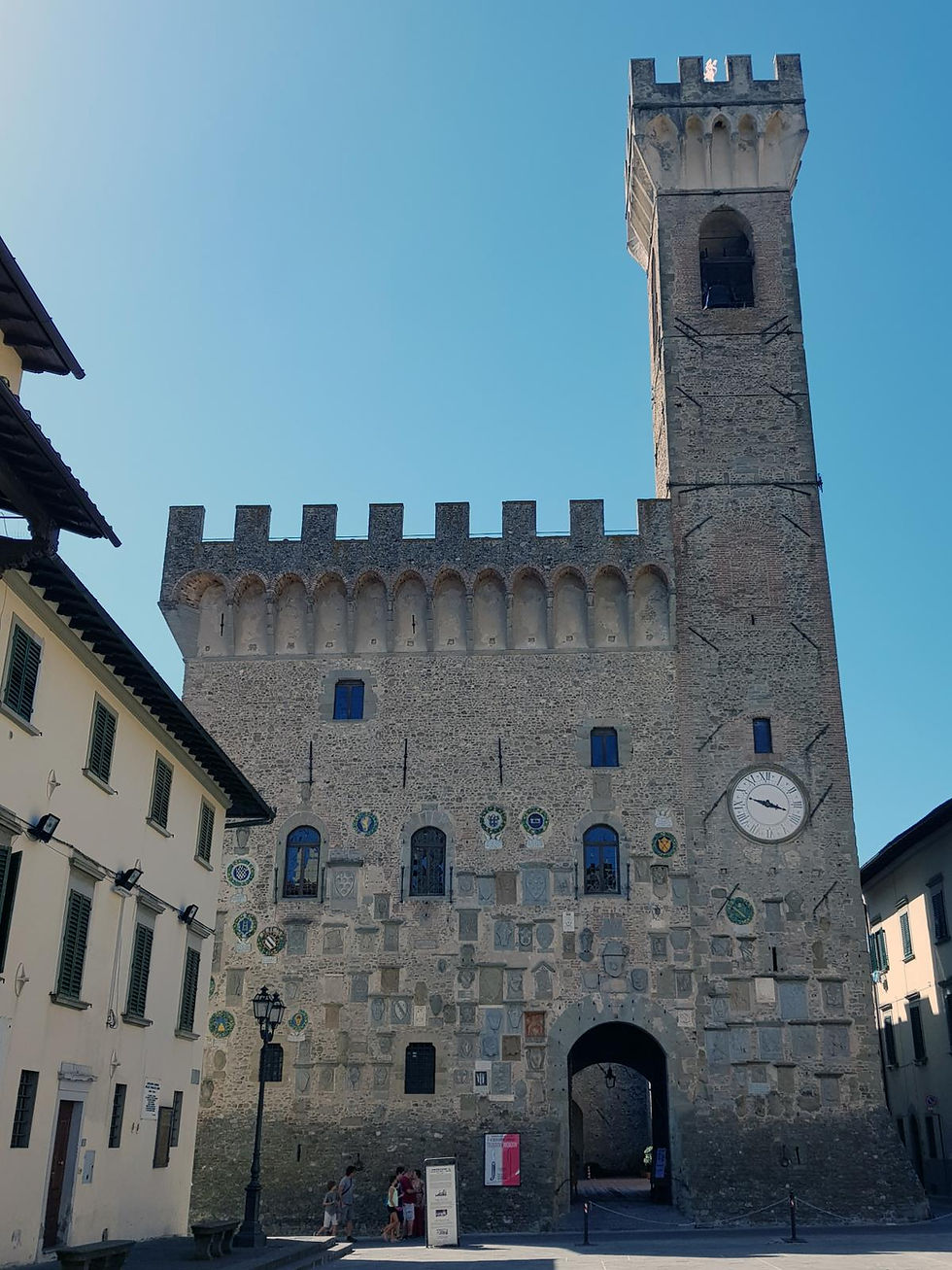
Start in Scarperia, one of Italy’s Most Beautiful Villages.
Founded by the Republic of Florence in 1306, it has a compact historic centre dominated by the Palazzo dei Vicari.
Inside, you’ll find the Museum of Cutting Tools, dedicated to the knife-making tradition that made the town famous. You can also climb the Palazzo’s tower for a view over the village and surrounding countryside.
A short walk away is the Historic Knife-Maker’s Workshop, where the workbench, forge and tools of the traditional craft have been preserved. Visits are available by appointment.
If you’d like to take home something genuinely connected to the area, a knife made by one of Scarperia’s workshops is one of the most distinctive souvenirs from Mugello.
Plan your visit: Palazzo dei Vicari and the Museum of Cutting Tools – opening times and contact details
A Detour to Sant’Agata
From Scarperia, it’s just a short drive to Sant’Agata, a small village dominated by its beautiful Romanesque parish church.
The village is also home to the Archaeological Documentation Centre, the Sacred Art Collection and, above all, Leprino’s Sant’Agata: Artisan and Rural Life, a fascinating recreation of village life through animated figures and scenes.
It’s a particularly enjoyable detour if you’re travelling with children.
Plan your visit: Sant’Agata museums and latest opening times
Bosco ai Frati
On the way towards Galliano, it’s worth stopping at Bosco ai Frati Convent, one of the area’s most fascinating religious sites.
The convent was rebuilt at the request of Cosimo de’ Medici to a design attributed to Michelozzo. Inside, it houses an important wooden crucifix attributed to Donatello.
It’s a relatively short visit, but offers a change of pace from the villages and helps bring home just how deeply the Medici shaped the area.
Opening times and visitor information: Museums and places to visit in Scarperia and San Piero
Cafaggiolo and Villa Medicea del Trebbio
You’re now in the heart of Medici country.
Villa Medicea di Cafaggiolo was one of the family’s most important residences and a meeting place for artists and intellectuals connected with the Florentine court.
The villa is not open to visitors inside, so it’s best seen as a historic landmark and part of the Medici landscape along the route, rather than as a stop for a tour.
Nearby, on a hill lined with cypress trees, stands Villa Medicea del Trebbio. Built in the 15th century by Michelozzo for Cosimo the Elder, it is part of the UNESCO-listed Medici Villas and Gardens of Tuscany.
Del Trebbio is privately owned, but guided tours and tastings are available by appointment. Book ahead and it can become a highlight of your weekend.
Arrange a visit: Villa Medicea del Trebbio – tours and contact details
San Piero a Sieve and the Fortress of San Martino
You can round off the Medici itinerary in San Piero a Sieve.
Above the town stands the imposing Fortress of San Martino, built at the behest of Cosimo I de’ Medici from 1569 onwards. It is one of the most significant examples of Medici military architecture in Mugello.
The fortress is privately owned and is not generally open to visitors. You can walk in the surrounding area, and guided visits, walks and events about its history are organised from time to time.
Local information: Scarperia and San Piero – Mugello Tourist Office
Summer option: Lake Bilancino
If you’re visiting Mugello in the warmer months, you could end the first day at Lake Bilancino.
It’s a short distance from Barberino and the Medici itinerary, and offers a complete change of pace, with beaches, walks, water sports and time to relax by the water.
Plan your visit: Lake Bilancino – visitor information and activities
Day 2 – Choose Your Own Mugello
We wouldn’t suggest following just one itinerary on the second day.
Instead, choose what to do based on what you enjoyed most on the first day and what you’re looking for from your weekend.
Option 1 – Art and Countryside: Borgo San Lorenzo and Vicchio
This is probably the best option if it’s your first time in Mugello.
Borgo San Lorenzo
Start in Borgo San Lorenzo, the main town in the valley.
The Parish Church of San Lorenzo is worth a visit. As you stroll through town, look out for the many traces left by the Chini family, leading figures in Italian Art Nouveau.
The Chini Museum at Villa Pecori Giraldi is currently closed for renovation, with reopening expected by the end of 2026. We wouldn’t include it in your itinerary until it has officially reopened.
The museum’s closure doesn’t mean you have to miss Borgo San Lorenzo’s Art Nouveau heritage: there’s a dedicated town trail featuring buildings, decorative details and works by the Chini family.
Find out more: Chini Museum and the Art Nouveau trail in Borgo San Lorenzo
Casa d’Erci and the Mugello Countryside
If you’re interested in rural history, the Casa d’Erci Museum of Rural Life is near Borgo San Lorenzo.
Housed in an old farmhouse, the museum brings together tools, objects and records of everyday life and work in the Mugello countryside.
It’s a lovely alternative to visiting historic buildings and offers a very different perspective on the area.
Check opening times and contact details: Mugello museum network – museums and opening times
Vicchio: Land of Giotto and Fra Angelico

In the afternoon, continue to Vicchio.
Here, the landscape opens out across farmsteads, olive groves and rolling hills. The area is especially associated with Giotto and Fra Angelico.
In Vespignano, you’ll find Giotto’s House, which is open seasonally. Guided visits and workshops are also available by appointment.
After your visit, head into Vicchio town centre for a stroll around Piazza Giotto, then stop at nearby Lake Montelleri.
Plan your visit: Giotto’s House – opening times and contact details
For more background, read our guide to Vicchio: Land of Giotto and Fra Angelico.
What About Barbiana?
Barbiana is nearby, but we wouldn’t try to squeeze it into the same day.
The places associated with Don Lorenzo Milani and the Barbiana school deserve a few hours and are best explored as a separate day trip.
If you’d like to visit, use our guide to Don Lorenzo Milani and the Barbiana Trail to plan a day around it.
Option 2 – Countryside, Farms and Lake Bilancino
If, after a day of history and villages, you’d rather spend time outdoors, devote the second day to the countryside.
The Via del Latte
Mugello has a long tradition of livestock farming and dairy production.
The Via del Latte now connects 18 selected farms in the area. Some welcome visitors throughout the year by appointment.
It’s an easy way to discover rural Mugello: visit the farms, meet the farmers and perhaps buy cheese and other local produce directly from them.
Find and contact a farm: Via del Latte – farms open to visitors and contact details
Lake Bilancino
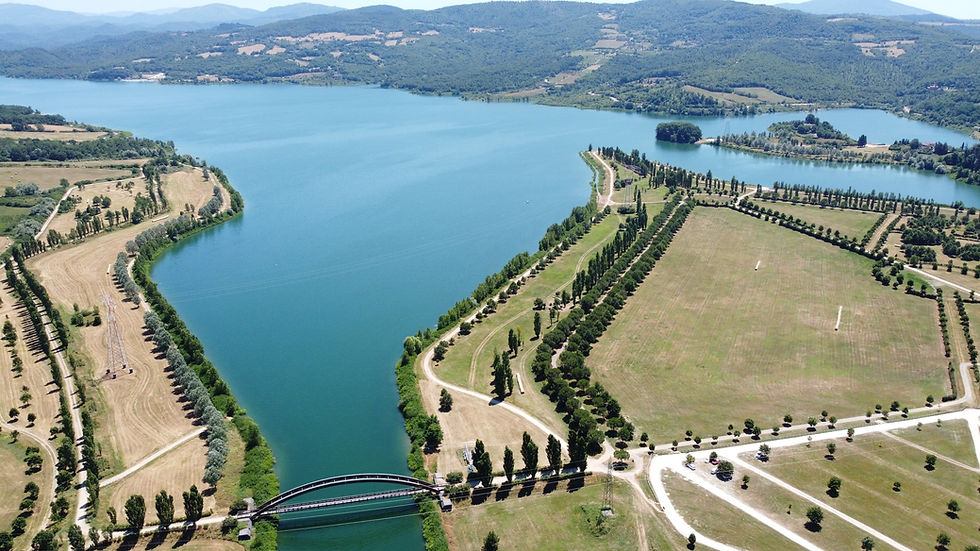
After visiting a farm, spend the rest of the day at Lake Bilancino.
In summer, you can swim and enjoy water sports. In other seasons, the lake is still a lovely place for a walk and some time outdoors.
Find out more: Guide to Lake Bilancino
This is probably the most relaxing option for day two, and it works particularly well with children.
Option 3 – Futa Pass, Firenzuola and Moscheta
If you’d rather explore woodland, mountains and 20th-century history, head towards the Apennines.
German Military Cemetery at Futa Pass

One of the most striking stops is the German Military Cemetery at Futa Pass.
At an altitude of 952 metres, it is the largest German military memorial in Italy and the final resting place of 30,776 war dead. The cemetery was dedicated in 1969.
It’s also architecturally distinctive: a stone wall, around two kilometres long, winds up the hillside in a spiral, following the contours of the land.
It’s a quiet, sobering place, quite different from the other stops on the weekend itinerary. A visit helps you understand how deeply the Second World War and the Gothic Line marked these mountains.
Plan your visit: German Military Cemetery at Futa Pass – official information
Firenzuola

From Firenzuola, you can continue to Moscheta, home to the thousand-year-old abbey nestled in the woods.
The Museum of the Historic Landscape of the Apennines is housed within the abbey complex, with trails of varying lengths starting nearby.
It’s a lovely way to end a day that began at Futa Pass: first, a reminder of the war, then the landscapes and woodlands of the Apennines.
Check museum opening times: Mugello museum network – Moscheta and natural history museums
Our blog also features a dedicated itinerary: The Gothic Line Museum and Moscheta
Option 4 – Palazzuolo sul Senio and Marradi
For something completely different, spend the second day exploring Romagna Toscana, the easternmost part of Alto Mugello.
Palazzuolo sul Senio
Palazzuolo sul Senio is one of Italy’s Most Beautiful Villages.
Its well-kept historic centre is small and charming, with stone houses and the 14th-century Palazzo dei Capitani, home to the Museum of Archaeology of Alto Mugello and the Museum of Mountain Communities.
There’s no need for an elaborate itinerary here: a walk through the village, a visit to the museums and lunch make for a lovely morning.
Plan your visit: Palazzuolo sul Senio – official guide
Marradi
From Palazzuolo, you can continue to Marradi, known for its connection with the poet Dino Campana and its chestnut-growing tradition.
The historic centre is home to elegant palaces, the Teatro degli Animosi and the Campana Study Centre.
Walkers can also follow several routes dedicated to places described by Campana, including trails between Marradi and Palazzuolo.
In autumn, this option is especially appealing, with chestnut woods, autumn colours and Mugello PGI chestnuts.
Find out more: Marradi and the Dino Campana trails
Or Do Much Less
There’s a fifth option too: don’t try to fill the whole weekend.
Spend the first day in Scarperia.
Visit Borgo San Lorenzo and Vicchio on the second.
Enjoy a long lunch.
Take a walk in the countryside.
Browse a local shop.
Stop to buy cheese or other local produce.
If it’s your first time in Mugello, this is a perfectly good choice.
In fact, it’s probably one of the best ways to start getting to know the area.
What to Eat During a Weekend in Mugello
Whatever itinerary you choose, make sure you leave time to enjoy the local food.
The signature dish is Mugello potato tortelli, usually served with ragù or butter and sage.
It’s also worth trying fresh pasta, grilled meat, game, local cheeses and cured meats.
What’s in season makes a big difference to local menus. In spring, look out for prugnoli mushrooms; from late summer into autumn, porcini and truffles come into season.
Autumn is the time for Mugello PGI chestnuts, used in castagnaccio, desserts and dishes made with chestnut flour or whole chestnuts.
Rather than seeking out a famous restaurant, we recommend choosing a trattoria that makes the most of local, seasonal produce.
Which Itinerary Should You Choose?
If you have just two days, here are the combinations we’d suggest.
First time in Mugello
Day 1: Scarperia → Bosco ai Frati → Medici sitesDay 2: Borgo San Lorenzo → Vicchio
A slow weekend
Day 1: Scarperia → Cafaggiolo from the outside → Villa del TrebbioDay 2: Vicchio → countryside → a leisurely lunch
Nature and history
Day 1: Medici itineraryDay 2: Futa Military Cemetery → Firenzuola → Moscheta
A summer weekend
Day 1: Scarperia → Medici sitesDay 2: Via del Latte farm → Lake Bilancino
An autumn weekend
Day 1: Central MugelloDay 2: Palazzuolo sul Senio → Marradi
A weekend with children
Day 1: Scarperia → Sant’AgataDay 2: Via del Latte farm → Lake Bilancino
Our blog also has a full guide to Mugello with Kids, with plenty more ideas for a family stay.
When to Visit Mugello
Every season has something different to offer.
Spring is perfect for exploring the countryside and going for walks.
May and June bring especially green landscapes across the valley floor. As summer approaches, the fields begin to take on the colours of the season.
Summer is the time for Lake Bilancino, swimming pools and water activities.
Autumn may be the most beautiful season for woodland walks, chestnuts, mushrooms, autumn colours and food festivals.
Winter can also be a lovely time for a peaceful weekend of village visits, small museums and good food.
Before setting off, it’s always worth checking the events calendar. A historical festival, food fair or exhibition could easily become one of the highlights of your trip.
See what’s on during your stay: Mugello events calendar
Getting Around Mugello
For a weekend like this, a car is the most convenient option.
The Faentina railway connects Florence with Borgo San Lorenzo, Vicchio, Marradi and other towns. However, many villas, farms, small villages and natural attractions are much easier to reach by car. The area includes both central and Upper Mugello, with roads that wind through valley floors, hills and Apennine passes.
The roads themselves are part of the experience.
If you have time, leave the main roads and take the slower routes through the countryside.
That’s often where you’ll discover the best of Mugello.
Two Days Are Just the Beginning
The thing about a weekend in Mugello is that there will always be more to see.
You could explore the Medici side of the area, follow in the footsteps of Giotto and Fra Angelico, head for the Apennine woods, visit local farms, relax at Lake Bilancino or travel east to Palazzuolo sul Senio and Marradi in Romagna Toscana.
You won’t see it all in two days.
And you don’t need to try.
Mugello is best explored at a slower pace, with time for unexpected detours, leisurely lunches and places you come across by chance.
The best part may be having a good reason to come back.




Comments